

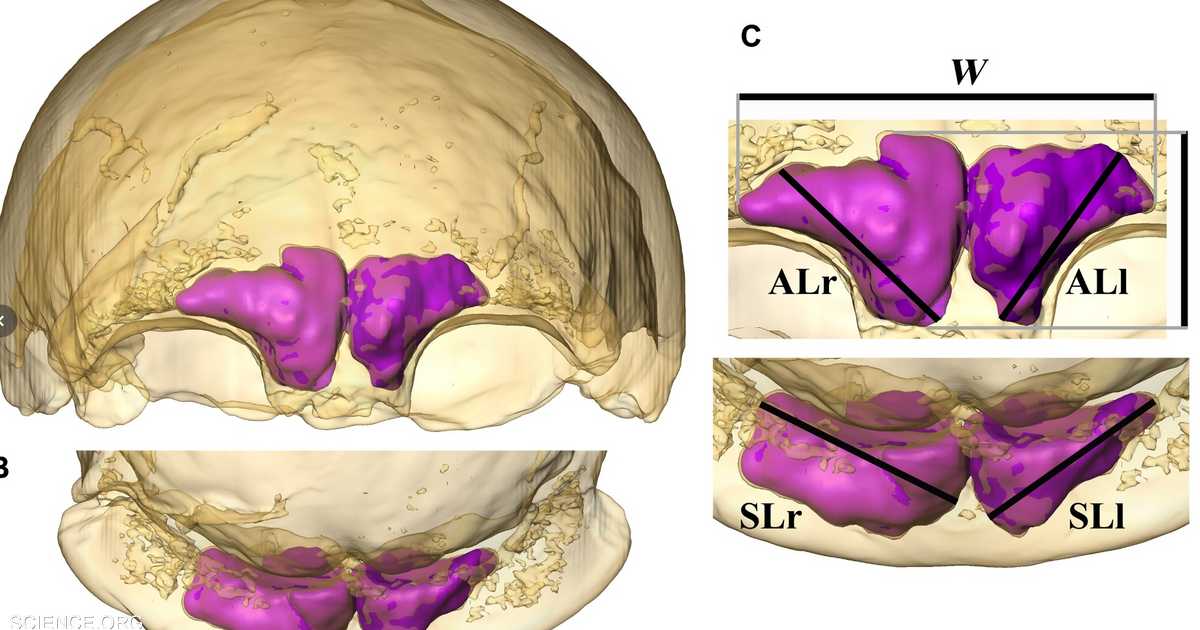
And explain the world Anthropologist Antoine Balso, an archeologist at the National Museum of Natural History, says the frontal sinuses “participate in the physiological balance of the face related to breathing.” However, the origin and development of these cavities, which lie so close to the nasal septum, are still shrouded in mystery. the brain.
Palso, lead author of the study published in Science Advances, explained that this is the first research to determine the location, shape and size of sinuses through “more than sixty specimens from about 20 species.”
The scientist noted that the scans of “almost all human fossils” were made possible by the collaboration of a large multinational team, which is unusual in the field of anthropology, as institutions holding fossils are often reluctant to conduct joint studies with third parties.
For the first time, the study documented a very clear difference between the two large groups. That is, there is a direct correlation between the size of the frontal sinuses and the brains of great apes, such as chimpanzees, bonobos, and gorillas, as well as early human races similar to the hominids of the Chadian coast.(Sahelanthropus tadensis) Or “Tomai”, andMonkeys Southern (“Lucy”), lateral Boise man.
However, the matter is quite different for mankind and mankind (homo)Like Homo erectus about two million years ago.
Balso explained that the size has increased the skull Species of the genus Homo erectus “have the sinuses generally smaller in relation to the size of the skull and more closely related to the shape of the face”. Adding to this are the strong differences within the same species, especially including modern man’s ancestors, Homo sapiens.
This diversity challenges many assumptions, such as that Neanderthals had larger nasal sinuses, which are believed to have enabled them to adapt to colder climates. The study shows that climate “doesn’t seem to be the only factor influencing the size of the frontal sinuses” in Homo sapiens, Palso added, adding that “it didn’t happen in Homo sapiens, so there’s no reason for it.” occurred in Neanderthals.”
added Research New data on the characteristics of human groups lead to questions about the taxonomy of the three currently unclassifiable giant-sinused specimens (Petralona, Bodo, and Broken Hill) in the genus, and Palso’s research may help in the future. Determines which species they belong to.

Prone to fits of apathy. Unable to type with boxing gloves on. Internet advocate. Avid travel enthusiast. Entrepreneur. Music expert.