

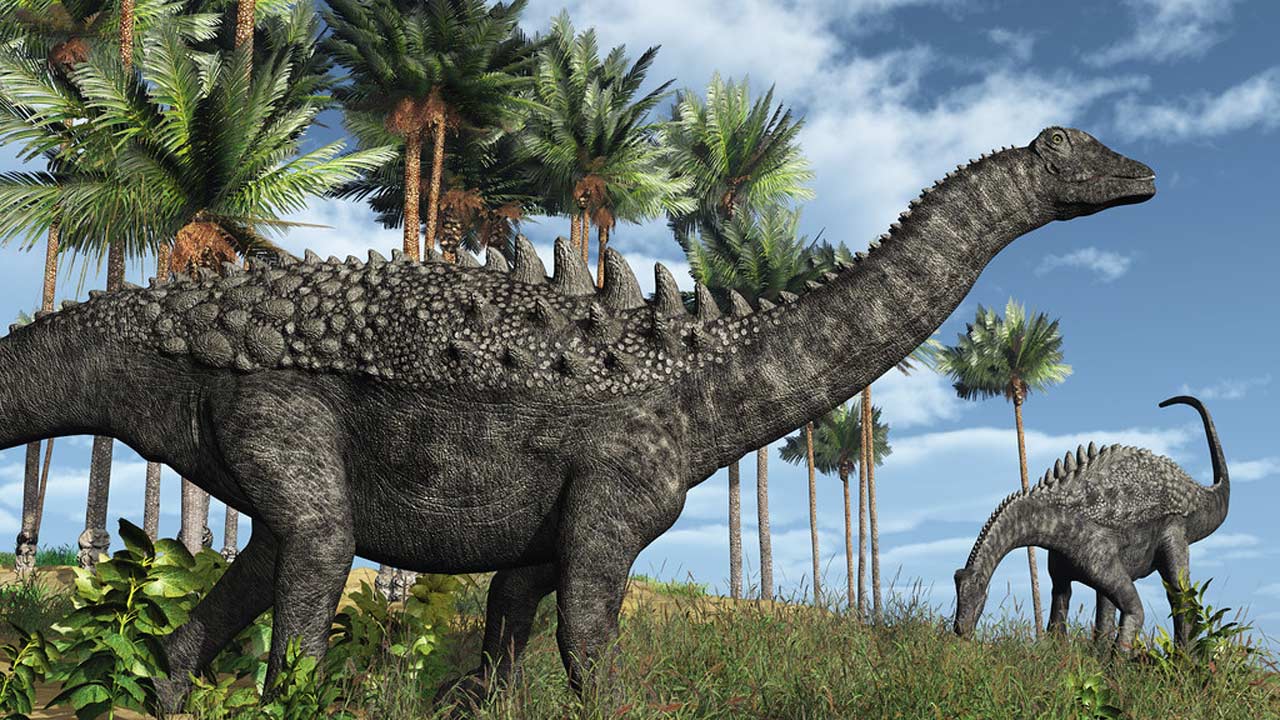
Researchers at the University of Bath and the Museum of Natural History have conducted a new analysis claiming that dinosaurs declined before the impact of a massive asteroid that caused the extinction of most species on Earth. Researchers believe that dinosaurs could have dominated the Earth if the asteroid effect had not occurred. By the time the asteroid struck at the end of the Cretaceous, dinosaurs were widespread globally.
Before the asteroid’s influence, dinosaurs inhabited all continents of the planet, and dinosaurs were the dominant animal form in most terrestrial ecosystems. Despite the widespread diversity, paleobiologists still argue that dinosaurs are declining in diversity when they become extinct. Researchers A group of different dinosaur family trees was collected and statistical modeling was used to assess whether each major dinosaur group could create new species at that time.
The study found that dinosaurs did not decline before the asteroid impact, contrary to some previous studies. The authors suggest that if the impact had not occurred, the dinosaurs would have remained the dominant group of terrestrial animals on the planet. Researcher Joe Bonser, the lead author of the study, says that previous studies have shown that dinosaurs would have died if not for the impact of the asteroid.
A new study using an expanded data set to include the latest times involving broader family perspectives and broader dinosaur species shows that not all results point to that conclusion. Bonser says dinosaurs are only about half as low in results. Instead of estimating the number of species within a family, the researchers used statistical methods to overcome the sample bias that looked at the specification rate of dinosaur families.
The main thing in the paper is that the decision is not as simple as with a few trees. Bonser argues that there are large and unavoidable biases in the fossil record, and that the lack of data often indicates the decline of species, but this decline may not reflect the reality of the time.

Problem solver. Incurable bacon specialist. Falls down a lot. Coffee maven. Communicator.