

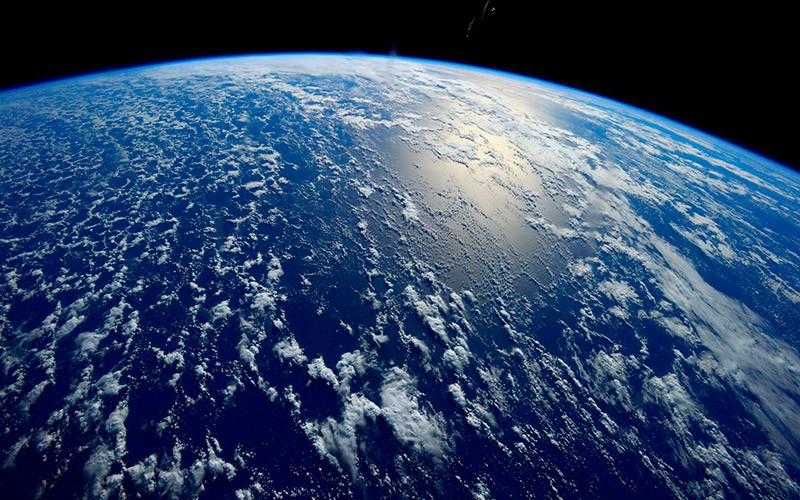
In fact, 70% of our planet’s surface is covered by water, and the total volume of water on Earth is estimated at 1.39 billion cubic kilometers. At first glance, this may seem like much, however, the mass of water is very small compared to the mass of the entire planet: it is 4,000 times smaller than the mass of Earth. In this light, the mass of water does not seem so large, but the question still remains: where on earth is there so much water?
Currently, scientists have several white theories that are sufficient to fill the Earth’s surface with oceans and seas, as well as to form large glaciers. Each of these systems may have contributed to the formation of the Earth’s aquifer, and in the scientific community the only controversy is over the significance of these contributions.
The first water bodies on Earth were ice comets and asteroids. It is believed that for billions of years water could have been brought to small parts of the earth, resulting in up to 70% of the planet’s surface being stored. For a long time, this theory was basic and practically irreversible, but modern research shows that the water thus brought to Earth is not enough to fill the oceans to their current size.

Another source of water is considered to be the chemical reactions in the lithosphere: hydrogen and oxygen have been present in the earth since its formation, waiting for the opportunity to connect. Geologists have shown that water can form in rocks by contact with minerals, including hydrogen and oxygen, and then transferred to the surface by various mechanisms. The modeling of these processes shows that such a system would produce three times as much water as all the oceans contain today. In this regard, many scientists are considering the mechanism of water formation in the lithosphere, the main source of water on Earth.
The third source of water is the chemical reactions in the atmosphere. Water formed there in the form of vapor filling the atmosphere, condensing into ejected microparticles during a volcanic eruption and then falling to the surface in the form of rain. At present, this system is considered to be the most important, and it may have made a very small contribution to the filling of the world’s oceans.

Prone to fits of apathy. Unable to type with boxing gloves on. Internet advocate. Avid travel enthusiast. Entrepreneur. Music expert.