

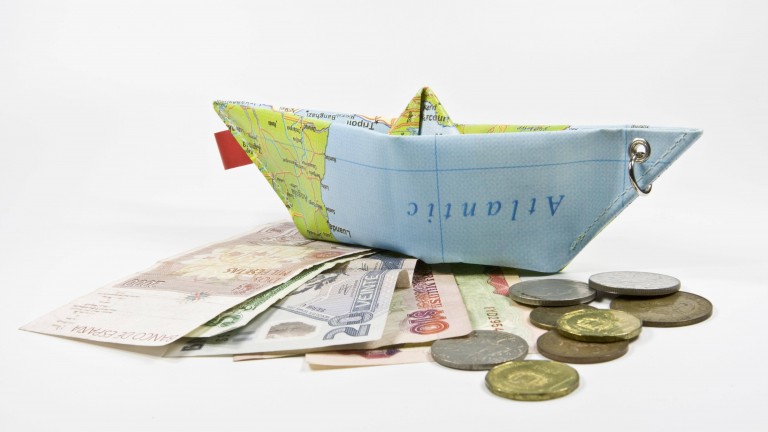
Money is also a big part of cultural identity; How it is handled says a lot about the people of a country. Finance app “Revolt” (more than 16 million customers worldwide) has compiled some interesting money habits around the world. Who ticks how
Each country has its own Swabians
In Germany, the people of Stuttgart are considered penny pinchers, in Poland the inhabitants of Posnan and Krakw, in Italy the inhabitants of Genoese, in Ireland the northern Cavan County, and in Spain the Catalans the richest in the country.
Together or separately?
Anyone who invites you to a restaurant must pay the bill in Poland. In Italy it is common for a man to receive a bill from a waitress: a woman should not find out how expensive a visit to a restaurant is. But if you sit in a group, the amount will be divided equally. It’s different in Ireland and Spain: everyone invites others to a round until they get their chance.
Tip – Exemption or Liability?
In terms of tipping, this is not a habit in Poland as it is in Portugal or Italy – unless the service is particularly good.
There is no tipping culture in Japan: the maid even follows tourists to return the tip. However, there are practical reasons for this: Waiters are responsible for money comparisons, and improper contributions give employees more headaches than happiness.
In the US, tipping is essential for the maid as the basic salary is low. Pay only ten percent if you are dissatisfied, 15 is average, and only 20 percent is value for service.
Money also has nicknames
Australians call their colorful bills by nicknames: a pink five dollar bill is a “shrimp”, a red 20 dollar bill is a “lobster” and a 50 dollar bill is a “pineapple”.
In London, too, there are special expressions about money – such as b. Monkey for 500.
The French use many linguistic synonyms for money, including the names of plants such as “oyster” (dock) and “blue” (grain).
And in Germany?
The most commonly used synonym is “coal”: the term dates back to the 19th century, when coal became an integral part of the economy.

Prone to fits of apathy. Unable to type with boxing gloves on. Internet advocate. Avid travel enthusiast. Entrepreneur. Music expert.