

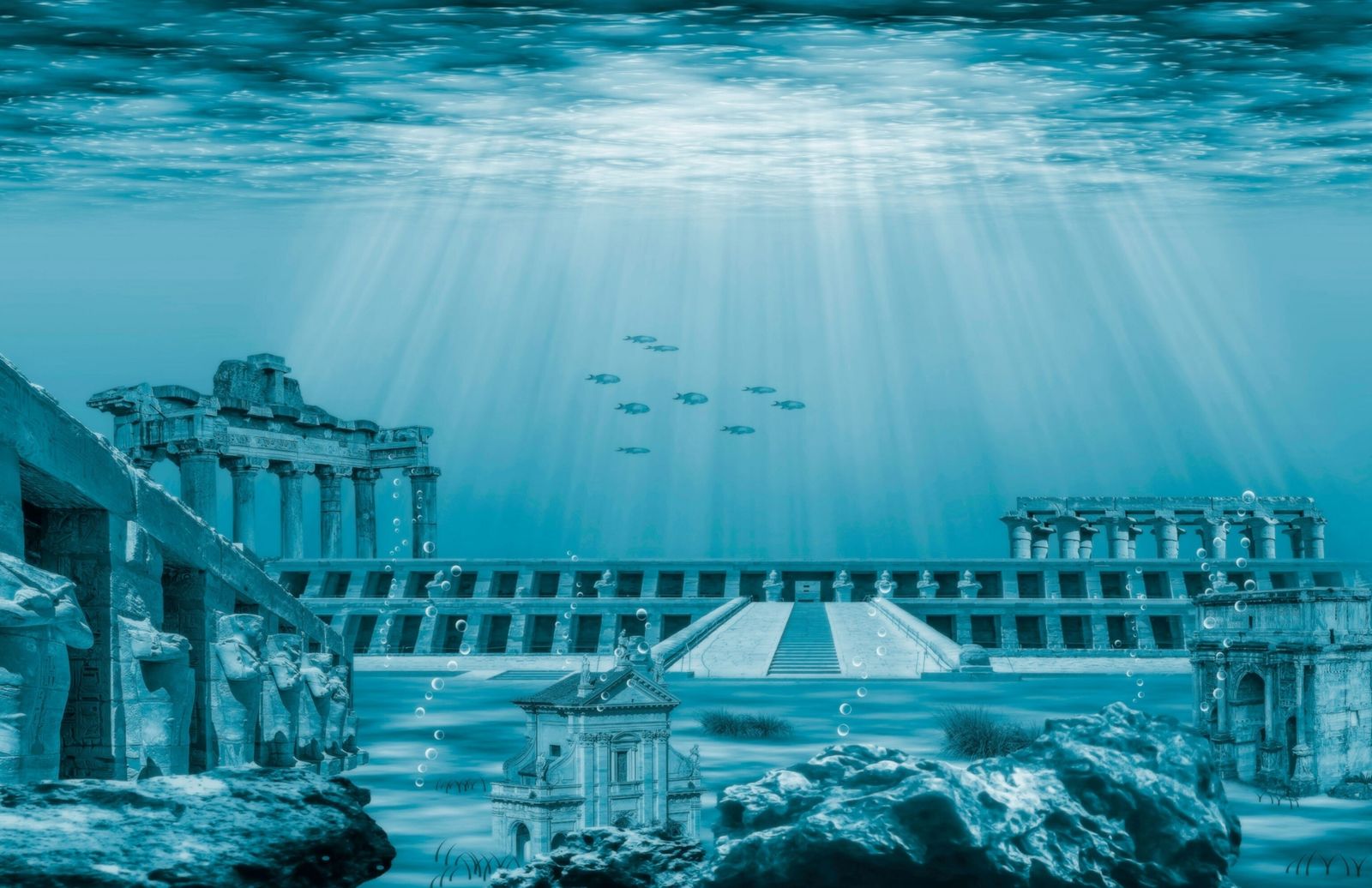
Atlantis and its inhabitants remain very popular subjects in books, movies, TV shows, comics, and music. Some of these works are reminiscent of Plato’s story of hatred and destruction. One of those unusual reminders definitely remains Atlantis Popular song by Scottish singer Donovan, published in 1969. It tells how Atlantis abandoned boats full of ancient sages before becoming a love song aimed at the singer’s “antediluvian love”: “Under the sea, she might be where I want to be. »
Later authors such as Sir Francis Bacon, William Blake or the American politician Ignatius Donnelly continued. Atlantis In public consciousness. However, the question of the real existence of this place remained. Many historians and archaeologists have believed that the story may have been full of a major disaster, such as an earthquake, tsunami, or great flood. The most mentioned destination is the Aegean island of Santorini. Once a trading center known as Thera, the city and its island were swept away by a massive volcanic eruption about 3,600 years ago, possibly triggering a tsunami.
The lingering memory of this cataclysm may also have shaped Plato’s story. Scholars of the history of Atlantis have searched for evidence of ruins in Spain, the Bahamas, and India, to no avail. Today, explorers continue to search for the island or its inspiration in sunken cities around the world.
Island at the End of the World: Thule
The Greek explorer Pythias first wrote about the mysterious island of Thule in his account of the 4th.E century B.C. AD of the ocean. An intrepid traveler from Massalia, now Marseilles, Phytias visited and accurately described Western Europe. He said he spent six days sailing north of the British Isles, around the Arctic Circle. Scholars do not yet know whether Phytus landed on his own, but he wrote that the place had no land, sea, or air, but a mixture of all three, and its structure resembled that of a jellyfish.
Over the centuries, geologists have associated Thule with several possible Nordic islands: Iceland, Greenland, Norway, or Nova Scotia, especially since Pythias described the amazing tides, referring to the large-amplitude Bay of Fundy tides. Today, historians do not really know whether the distant land of Phytus was a real place or a description of some place on our planet. Be that as it may, today we speak of “Ultima Thule” to designate any isolated place on Earth. The name Thule also survives in Greenland, Thule Air Base is located in the Sandwich Islands, as well as the name of 69.E The chemical element, thulium, was discovered by a Swedish chemist.

Tv fanatic. Amateur food maven. Devoted webaholic. Travel lover. Entrepreneur. Evil writer. Beer guru.