

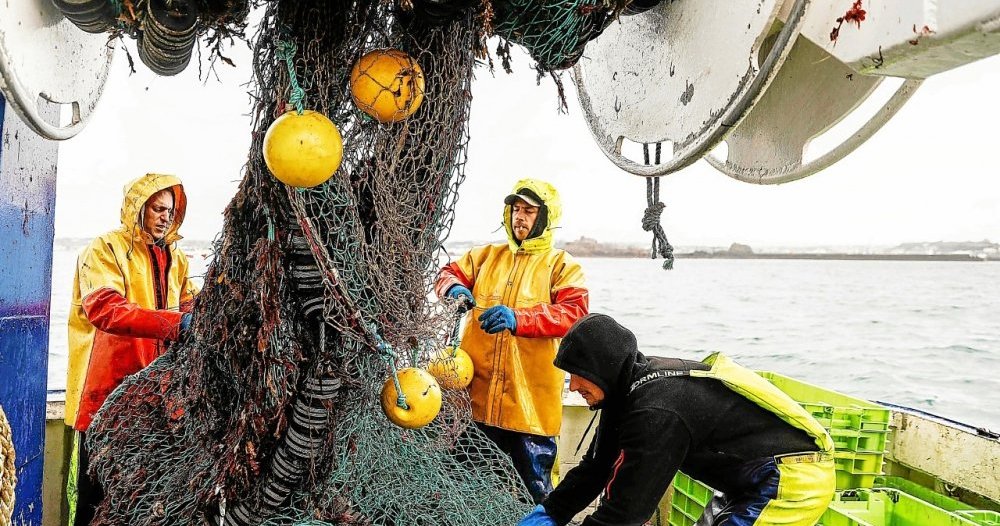
Whiting, hawk, herring, Haddock, horse mackerel, place, soul, code, ling, places … validated in the menu of European fisheries ministers, during a pre-arranged and fast-paced meeting on Wednesday, the first annual arrangement between the United States and the European Union after Brexit. It establishes the potential for catching millions of tons of fish from the English Channel and the Northwest Atlantic by 2021.
One would expect the British to try to secure their territory. But the provisional version of this secret text that Le Telegram has been considering for the past year indicates that Europeans will be more flexible enough to continue their activities by the end of the year.
“Guarantee of Flexible Management”
It is still possible to transfer up to 10% of the allowed TAC (authorized catch rate), for example, in the Irish Sea to the Celtic Sea. The same ratio can be carried from one year to the next. Contrary to what London demands, things like lobster, which are not included in the quota, have no species-by-species ton limit. This arrangement is especially applicable around the Channel Islands.
In the delicate subject of the Celtic Sea Code, the shares are declining, and the negotiators call it the “Bycatch” TAC. A closure would actually prevent other very important TACs in the area, such as Whiting, from being exploited.
Some details will be clarified by the Bilateral Science Committee, which will be formed soon. It will work specifically on the quota transfer between Europeans and Britons, which will reach 36,000 tonnes by 2020, including more than 5,000 with France, which is currently operating on an mal mal formal basis.
For Pierre Carleskind, President of the Fisheries Committee of the European Parliament, the agreement provides “guarantees of flexible management.”
Formal formal notice
Paris received an unpleasant surprise on Wednesday after receiving a formal notice from the Brussels Commission on restrictions. France “does not ensure the automatic and systematic documentary inspection intended to examine the operations of ships,” they noted. The Cabinet of Ministers of the Sea referred to the Telegram as a “particularly strict” procedure referred to as the “Collection of Declaration Liabilities”. [est] “90% of requests” from the Commission were met. Paris’ response is expected by the end of August.
Support a professional editorial staff in the service of Brittany and Bretton: Subscribe from 1 per month.
I subscribe

Prone to fits of apathy. Unable to type with boxing gloves on. Internet advocate. Avid travel enthusiast. Entrepreneur. Music expert.