

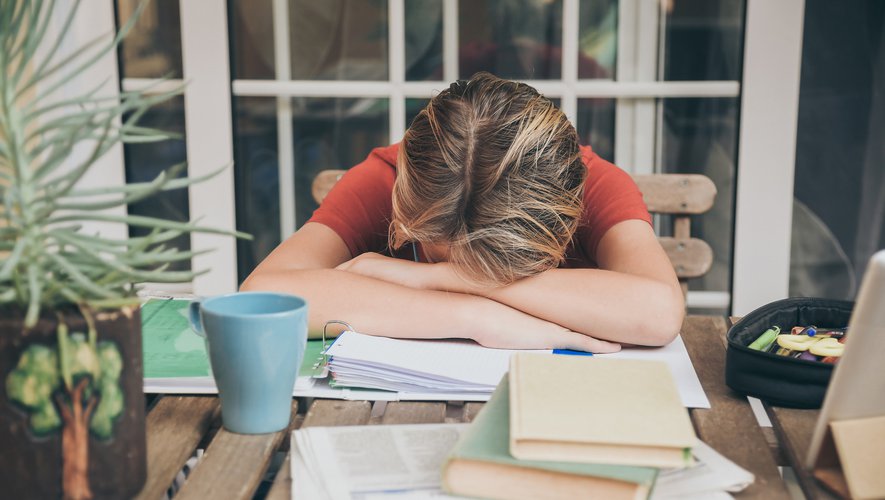
(ETX Daily Up) – What is the place for students’ mental health? This Blue Monday, which is said to be the saddest day of the year, reminds Home Student Health Insurance Company that approximately one in two suffers from chronic depression.
The third Monday in January is the saddest day of the year, according to an advertising campaign that has been organizing the meeting since 2005. During this “blue Monday”, student Mutual Hyme recalls that about one in two students (49%) regularly suffers from depression. “Life is a large, bohemian, but complex population,” explains Heim’s spokeswoman Pierre Fivere. According to Student Mutual, 6 out of 10 students regularly experience grief.
“Pandemic has had a strong impact on the lives of these young people, having been in the specialist position for 15 years, and distance education prevents first-year students from creating social relationships.” In addition, Covid-19 has helped to make students more vulnerable and prevent them from finding a “job” in commonly recruited areas such as restaurants or the sale of ready-to-wear clothing.
“In a few months, an entire generation of students will see their entire student life twisted by Covid-19,” recalls Pierre Fifere, who said the average duration of higher education in France is 3 years.
Identify isolated people
“In the work of raising awareness, it is difficult to enter the realm of those closest to you,” explains Pierre Fivere. The second advocates a “protective community.” “It can happen to anyone, from the teacher to the student, into the family circle.” This is a question that needs to be addressed in the light of the symptoms that a young person may experience. “It can be chronic fatigue, insomnia, alcoholism or the use of psychoactive substances, or any change in habit,” the specialist lists. A few verses will also tell you about the symptoms of the disorder such as “I can not control” or “I’m tired”.
“We are still lagging behind in identifying mental disabilities in France, Pierre Fivere regrets, but we are inspired by initiatives from our Anglo-Saxon neighborhood. From the concept of ‘Protective Collective’, Irish students started a free and anonymous helpline in 1970 in Ireland. Spread and now exists in France.
This listening service conducted by the students is above all for the students. The number 01.88.32.12.32 is open every evening (except Wednesdays and Thursdays) from 9am to 2:30 pm.
“No bad reason to call”, Reminds me of nightline.fr, “Student volunteers are trained to talk about anything, so if you have a blues in the evening or want to talk about a movie you’ve seen in the movie, feel free to contact them. They are there for that.”

Wannabe twitter trailblazer. Troublemaker. Freelance beer evangelist. Amateur pop culture nerd.